Annual Letter 2024

Annual Letter 2024

David Grinberg

December 20, 2024

Reflecting on a transformative year of growth as a fund manager, navigating the challenges of youth in finance, and building a track record around our core investment thesis.

Our first official year in business exceeded expectations, offering insights into macro trends, human capital investment, and the path toward creating a new asset class with zero correlation to public benchmarks.

Three Lives, One Journey

I feel as though I lived three different lives this year. Three consecutive deaths and rebirths. 2024 was my official starting line for benchmarking my performance as a fund manager. I learned much more than I thought I would at the start of this year. My allocation processes have become routine after seven years as a quantitative derivatives trader. I've been fortunate enough to earn my way into the world of professional investing.

Going your way in finance is hard. I'm constantly taking leaps of faith in new people, ideas, and systems. Yet, there hasn't been anything more fulfilling and motivating than seeing the vision expand. "The first step is seeing what's possible, David." That is part of what a great mentor told me on my trip to Dubai earlier in June.

The Young Fund Manager's Paradox

Progress is the future result of prior experience correcting decisions made in the present and is often mistakenly linked to age. The Catch-22 of a (very) young up-and-coming fund manager is that while your performance may be stellar, people will still see you as a little guy who's getting lucky. People tell me I need more institutional experience because "The ripe old age of 24" may not be the best look for a fund manager.

But they never see the countless hours of work, stress, and sacrifices I made to make this possible. 99% of this game is lonely preparation, and 1% public performance. The more I sweat my inputs, the better my outputs become. I've become comfortable in my skin, and every moment of imposter syndrome I get is just my subconscious telling me I'm about to climb to a higher version of my ideal self. The never-ending climb toward self-mastery is more fulfilling than any P/L attached to it.

Young fund manager development and growth

Building a New Asset Class

My North Star is the track record I've built around my thesis. Several advisers told me, "You can't do everything in your fund. It's not marketable." Trying to beat the market is hard enough as it is, but appeasing everyone is impossible. While our fund is small, it offers competitive advantages that larger enterprises do not have. My vision is to create a new asset class. Something that offers superior risk-adjusted returns with zero correlation to public benchmarks.

But our publicly traded portfolio speaks for itself. Some assets are more challenging to mark than others, yet I am not worried about market beta comparisons for our less liquid alternative investments. While this is our first official year in business, we achieved more than I ever expected. At the end of the day, people are betting on me, and I won't let them down.

Trump Administration and Economic Outlook

Reviewing last year's annual letter, nothing has changed geopolitically aside from the recent American election favoring President Trump. We view this as a semi-deflationary catalyst as the US dollar strengthens. I can see tax cuts improving business development. The Fed will likely continue to lower interest rates, ultimately generating optimism in the economy. The biggest challenge the Trump administration will face is dealing with the ever-expanding debts on America's balance sheet.

The second and third-wave effects of downsizing the government to reduce our debt burden are too complex to quantify. The risk they face is simplifying long-lasting institutions until they break, then again, things are already quite broken.

Economic policy and political transition analysis

Fed Policy and Inflation Dynamics

The sudden and dramatic shift in Fed policy signals that the economy is experiencing a minor recession. Otherwise, why lower rates? With the Biden administration barely improving the economy, Fed Chair Powell became the de facto President of The Economic Health of the United States. American GDP growth sits at 2.5%. With the Trump presidency, expecting 3-3.5% y/y makes sense. The trouble with Powell reaching his 2% annualized inflation goal stems from housing and medical service costs.

Shelter costs still hover around 5% (TTM), and medical service costs have shot up to nearly 4% (TTM). The BLS data on physician vs. administrator growth from 1970 to 2009 is alarming. There are approximately 20 to 25 administrators for every doctor. It's not just in healthcare; education is another example of an incredibly inflated bureaucratic industry. But, there is speculative opportunity in these industries for those willing to bet on undercutting these industries.

Industrial Renaissance and Market Opportunities

I see many industrial catalysts and feel relieved that AI is no longer the only tailwind pushing valuations forward. Earnings multiples are relatively more reasonable than they were to popular Dot Com comparisons, and historically, technology has only stimulated more job growth. It will be interesting to see public equity valuations reprice as companies are forced to refinance their debt finally. Credit card delinquencies are dropping, and unemployment trends are stable.

Additionally, it is exciting to see institutions and governments adopting Bitcoin as a currency, which can further reduce inflation risk. Overall, I am bullish on this administration and believe America is about to enter an economic renaissance. That means a lot of people are going to look like financial geniuses. In times like this, allocating aggressively and monitoring defensively is vital.

Industrial renaissance and investment opportunities

Human Capital as the Ultimate Asset

Since the macroeconomic picture looks rosy, we must allocate from a bottom-up framework focusing on filling sector gaps in our portfolio. In my underwriting process, I ask, "What moves the needle for this allocation?" What moves the needle to optimize energy expenditure, the operational efficiency of our portfolio companies, and the factors that drive the asymmetrical returns of our overall portfolio? As artificial intelligence automates more of our daily lives, information advantages as a form of economic moat will become less potent.

Ironically, human capital will continue to be the greatest asset civilization can ever produce. We must invest more in people and give them the confidence to disrupt their industries. So, what does human capital mean for our firm as we tackle 2025? Green Mountain Advisers is evolving into a boutique capital markets enterprise. Our firm has expanded its service scope and now offers management consulting services to small technology companies.


Legacy and Looking Forward

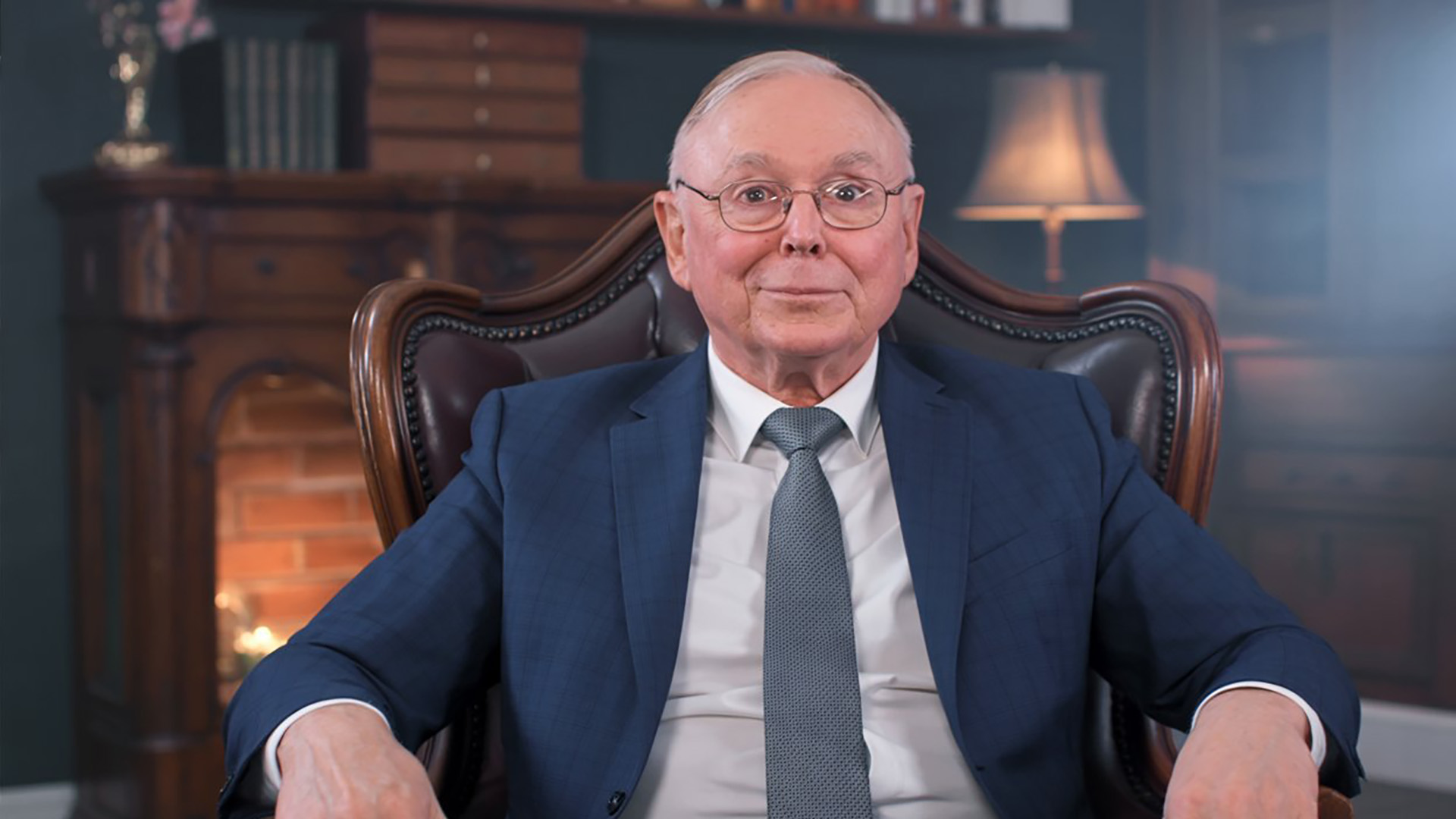
I've begun to live more for others than myself, and that has fueled my will to make an impact more than money ever could. Seeing our team's direct transformative effect on people and struggling businesses is far more meaningful than any P/L on a dashboard. I've reflected a lot since the passing of the great Charlie Munger earlier this year. His nonchalant attitude and steady hand at Berkshire is precisely what Buffett needed. But it was also something the entire market needed.

Charlie believed in America and taught generations of great asset managers what it means to be an investor. I am honored to emulate his frameworks and have the opportunity to implement his teachings in my journey. While Charlie is no longer with us, his message and practices will never be forgotten. The world has earned a much-deserved optimism as we enter the new year. We are closer to peace than society may believe. From Green Mountain Advisers to you and your family, we wish you a happy, healthy, and abundant New Year!

Self-Servicing America